Restaurant & Café Marketing for Repeat Visits
A practical guide to restaurant and café marketing built around repeat visits, local discovery, and operationally realistic tactics.
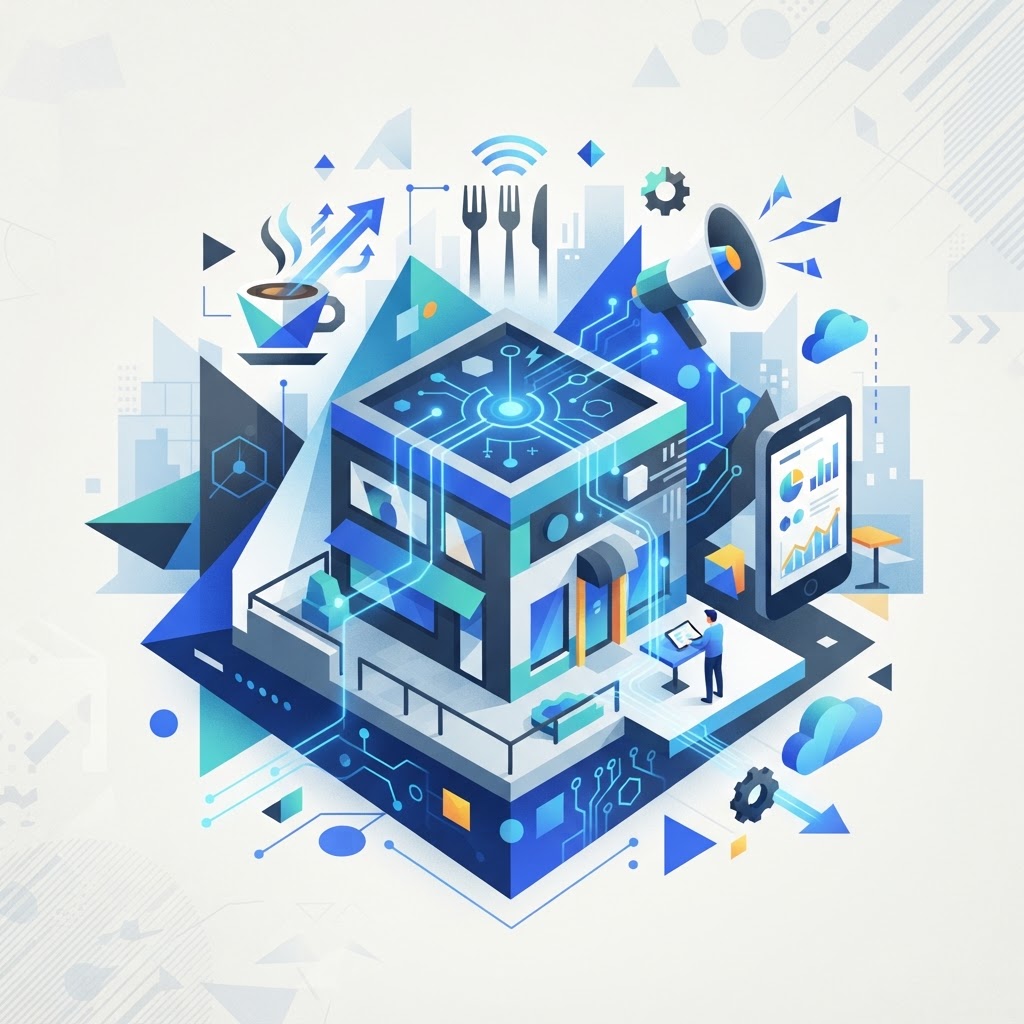
Restaurant & Café Marketing for Repeat Visits
Restaurant and café marketing works best when it is built around one simple goal: make it easier for nearby people to choose you the first time, and even easier for them to come back. For most operators, the problem is not a lack of marketing activity. It is scattered effort: a few social posts, occasional ads, an outdated menu page, and no reliable follow-up after the first visit.
A more practical approach is to treat marketing as a system tied to real customer behaviour: discovery, first visit, in-store experience, repeat purchase, and recommendation. When those stages are connected, marketing becomes more measurable and much less wasteful.
Start with the customer path, not the channel
Many restaurants and cafés begin with channels: Instagram, Google Ads, email, flyers, influencer outreach. That usually creates inconsistency because each channel starts saying something different. A better starting point is the decision path your guest follows.
For a local food business, that path often looks like this:
- A person becomes aware of an option through Google Maps, social content, word of mouth, walking by, or review sites.
- They compare quickly by checking photos, menu, hours, location, pricing cues, and reviews.
- They decide whether it feels convenient and credible for the moment they are in: coffee now, lunch with coworkers, family dinner, date night, takeout, weekend treat.
- They visit or order.
- They decide whether to return based on product quality, speed, service, atmosphere, and whether you remain memorable after the visit.
Your marketing should remove friction at each step.
A practical way to do this is to answer these questions:
- Can people find you easily when they search locally?
- Can they understand your offer in under 10 seconds?
- Do your photos and menu reduce uncertainty?
- Is there a clear reason to visit now, not later?
- Do you have a simple method for bringing first-time guests back?
If any answer is no, fix that before adding more channels.
Build a “decision-ready” local presence
For restaurants and cafés, local marketing is not mainly about broad reach. It is about being decision-ready wherever people check before visiting.
That means your core local assets should be accurate, current, and persuasive.
1. Keep your Google Business Profile operationally correct
For many food businesses, Google Business Profile is one of the most important discovery points. People use it to judge whether you are open, nearby, worth visiting, and right for the occasion.
Review these basics regularly:
- Business name, address, phone, and website
- Opening hours, including holiday or seasonal changes
- Primary and secondary categories
- Menu link
- Ordering or reservation links, if applicable
- Recent interior, exterior, food, and drink photos
- Accessible attributes and service options such as dine-in, takeout, patio, or delivery
Inaccurate hours alone can create avoidable frustration and negative reviews. For a restaurant or café, operational accuracy is marketing.
2. Make your website useful before making it impressive
Many restaurant websites focus on visual style but omit key decision information. Your website does not need to be complex. It needs to help someone decide.
At minimum, your most visited pages should make these items easy to find:
- Current menu
- Hours
- Location and parking or transit notes
- Reservation or ordering method
- Pricing cues, where helpful
- Dietary information, where relevant
- High-quality photos that reflect the real experience
If your menu is only available as a hard-to-read PDF, or if mobile users have to pinch and zoom, you are adding friction right before purchase.
3. Match your message to visit intent
“Great food” is too vague to market with. People choose restaurants and cafés based on moments and needs.
Examples of visit intent include:
- Quick weekday coffee
- Remote work café stop
- Healthy lunch near the office
- Family-friendly dinner
- Casual date spot
- Group brunch destination
- Takeout after work
Your homepage, Google profile description, photos, and social content should help people self-identify. If you are ideal for certain occasions, say so clearly.
Market the moments that drive demand
A common marketing mistake in hospitality is promoting the brand in general instead of promoting demand moments specifically. Guests rarely wake up wanting “content.” They want breakfast nearby, a quiet table, a fast lunch, an afternoon treat, or an easy dinner option.
That means your campaigns should be structured around moments you can realistically win.
Focus on time-based demand windows
Most restaurants and cafés have predictable windows where extra demand matters most:
- Morning commute
- Mid-morning café traffic
- Lunch rush
- Mid-afternoon slowdown
- Dinner period
- Weekend brunch
- Seasonal spikes
Your marketing should support the windows that matter financially and operationally.
For example:
- A café with excess afternoon capacity can promote pastries, refill culture, or work-friendly ambiance from 2 to 5 p.m.
- A restaurant with strong weekday lunch service can target nearby office workers with convenience and speed messaging.
- A venue with strong weekend atmosphere can create content around booking early or arriving before peak hours.
Use offers carefully
Discounting is not the only lever, and often not the best first one. Restaurants and cafés can protect brand perception by using low-friction incentives that reinforce behaviour instead of training price sensitivity.
Examples include:
- Limited-time seasonal menu features n- Combo framing for lunch or coffee pairings
- Early access to specials for email or SMS subscribers
- Loyalty progress rewards
- Event-based offers tied to slow periods
The goal is not constant promotion. It is timely relevance.
Plan around operational reality
Do not market what your team cannot deliver consistently. If service speed drops sharply at peak times, heavy promotion can backfire. If your kitchen performs best on a smaller featured menu, market that menu. If your café thrives as a quiet weekday workspace but becomes crowded on weekends, tailor your messaging by daypart.
Good restaurant marketing supports operations instead of fighting them.
Turn first visits into repeat visits
For most independent food businesses, repeat customers are more valuable than endlessly chasing first-time awareness. A guest who already knows your location, menu, and service style has much lower decision friction the next time.
The challenge is that many restaurants and cafés do little structured follow-up after a first purchase.
Collect first-party audience data simply
Not every business needs a complicated CRM setup. But most can benefit from a simple way to stay in touch with willing customers.
That may include:
- Email signup at checkout or on the website
- SMS signup for offers or announcements, where appropriate and compliant
- Loyalty or rewards participation
- Reservation follow-up lists
- Wi-Fi or receipt-based opt-ins, if implemented clearly and legally
The purpose is not to send constant promotions. It is to create permission-based communication.
Give people a reason to return soon
Repeat behaviour often depends on how quickly the second visit happens. Your post-visit marketing should answer: why come back this week or this month?
Useful follow-up themes include:
- New seasonal items
- Limited weekly features
- Quiet-time recommendations
- Event nights or tasting formats
- Reminder-based loyalty milestones
- Relevant holiday menus or ordering windows
The strongest return triggers are specific and timely, not generic.
Segment by behaviour when possible
Even simple segmentation improves performance. A lunch customer, weekend brunch guest, and specialty coffee regular do not all need the same message.
If your tools allow it, segment by signals such as:
- Dine-in vs takeout
- Time of visit
- Product preference
- Frequency
- Reservation vs walk-in behaviour
This does not need to be advanced to be effective. Even separating weekday lunch updates from weekend feature announcements can make your marketing more useful.
Make social media support conversion, not just visibility
Restaurants and cafés are naturally visual businesses, which makes social media attractive. But many teams spend significant effort posting without a clear role for the channel.
Social media should support at least one of these functions:
- Help new people discover you locally
- Reduce uncertainty before a visit
- Keep existing customers engaged between visits
- Drive attention to time-sensitive offers, events, or seasonal items
Post for decision value
Not every post needs to be polished. It needs to help someone imagine the experience and make a choice.
High-value content often includes:
- Short menu spotlights
- Daypart-specific recommendations
- Behind-the-counter context that builds familiarity
- Seating, patio, ambiance, or workspace visuals
- Staff picks
- Limited-time features
- “What to order if...” style content
This tends to work better than overly generic posts because it connects directly to customer intent.
Keep your profiles conversion-ready
Your bio, link, highlights, pinned posts, and location tags matter more than many brands assume. A person who lands on your profile should quickly understand:
- What type of place you are
- Where you are
- What you are known for
- When to visit
- How to order, book, or find the menu
Use paid social selectively
Paid social can help when you have a specific objective, such as promoting a new opening, a seasonal menu, an event, or awareness within a tight geographic radius. But broad campaigns without a clear audience or offer can waste budget quickly.
For many operators, small, well-defined campaigns tied to a concrete action perform better than ongoing vague awareness ads.
Use automation where it improves consistency
Automation in restaurant and café marketing should reduce manual repetition, not remove the human experience. The best use cases are usually simple.
Examples of practical automation include:
- Welcome emails after signup
- Reminder emails for seasonal launches
- Review request flows after reservations or online orders, where platform rules allow
- Birthday or anniversary offers, if customers have opted in
- Re-engagement messages for inactive loyalty members
- Lead capture and follow-up for private events or catering inquiries
These are proposed examples of what a business can implement; the right setup depends on the tools already in use and the team’s capacity to maintain them.
If you do use automation, apply three rules:
- Keep messages timely so they relate to real buying occasions.
- Avoid over-messaging because food businesses can fatigue audiences quickly.
- Connect messages to operations so promotions, hours, and inventory remain accurate.
A small number of relevant automated touchpoints usually outperforms a high volume of generic blasts.
Track the signals that actually matter
Restaurant and café marketing becomes more useful when measurement reflects operational reality. Vanity metrics alone, such as impressions or likes, are not enough.
Track a mix of discovery, conversion, and retention signals.
Useful discovery signals
- Google Business Profile views and actions
- Direction requests
- Website visits from local search
- Calls, reservations, or menu clicks
- Social profile visits from local audiences
Useful conversion signals
- Online orders
- Reservation completions
- Offer redemptions
- Catering or event inquiries
- Click-throughs to ordering platforms
Useful retention signals
- Email or SMS subscriber growth
- Repeat purchase rate, if measurable
- Loyalty participation
- Re-engagement response rate
- Review volume and themes
For many businesses, reviews deserve special attention. Reviews are not only a reputation signal; they are a source of operational feedback. If multiple guests mention slow service, confusing pickup flow, or menu inconsistency, that is both an experience issue and a marketing issue.
Set a simple monthly review rhythm:
- What helped people choose us?
- What almost stopped them?
- What made them return?
- What operational issue appears repeatedly?
That review process often reveals better marketing priorities than chasing trends.
Conclusion
Restaurant and café marketing is most effective when it is built around customer decisions, local convenience, and repeat behaviour. Instead of trying every channel, focus on making your business easy to find, easy to choose, and easy to return to.
If your local listings are accurate, your website answers key questions, your messaging reflects real visit occasions, and your follow-up encourages repeat visits, your marketing becomes much more practical. The strongest gains often come not from doing more, but from connecting the basics into a consistent system.
FAQ
What marketing channel matters most for a restaurant or café?
For many restaurants and cafés, local search visibility and decision assets matter most first. That includes your Google Business Profile, reviews, menu accessibility, hours, website usability, and location clarity. Social media can support demand, but local search often influences high-intent decisions.
Should restaurants and cafés use discounts to attract customers?
Sometimes, but carefully. Discounts can help in specific slow periods or launch moments, but overuse can weaken margins and train customers to wait for offers. In many cases, limited-time features, bundles, loyalty rewards, and occasion-based promotions are better first options.
How often should a restaurant or café send marketing emails or texts?
It depends on customer expectations, business type, and offer frequency. As an estimate, many businesses benefit more from a small number of timely, relevant messages than from frequent generic campaigns. Send communications when there is a real reason to visit, such as a new menu item, event, seasonal launch, or useful reminder.
Leadera Strategy Team
The Leadera Strategy Team researches and writes about AI marketing, GEO, automation, and growth for Canadian and North American businesses.
Frequently Asked Questions
Table of Contents
Ready to Build a Smarter Marketing System?
Leadera helps businesses turn strategy into execution with AI-powered marketing, automation, and growth systems.
Book a Free AI Marketing AuditRelated Articles

Automotive Marketing: Common Mistakes, Clear Fixes
A practical breakdown of the automotive marketing mistakes that weaken demand, reduce trust, and make attribution harder than it needs to be.

Travel & Hospitality Marketing Strategy Framework
A practical framework for travel and hospitality marketing that aligns demand capture, guest experience, and repeat booking growth.
E-commerce Marketing for New Stores: Start With the Storefront
A practical beginner guide to e-commerce marketing that starts with your storefront, tracking, offer, and retention before you scale traffic.

Travel & Hospitality Marketing for Variable Demand
A practical framework for travel and hospitality marketing built around variable demand, guest intent, and operational reality.
Get Smarter Marketing Insights Every Week
Join Leadera Insights and receive practical strategies on AI marketing, SEO, paid ads, content, and automation.