Real Estate Marketing Beyond Listings: Trends and Predictions
Real estate marketing is shifting from listing promotion to trust, speed, and lifecycle nurture. Here are the trends and predictions that matter most.
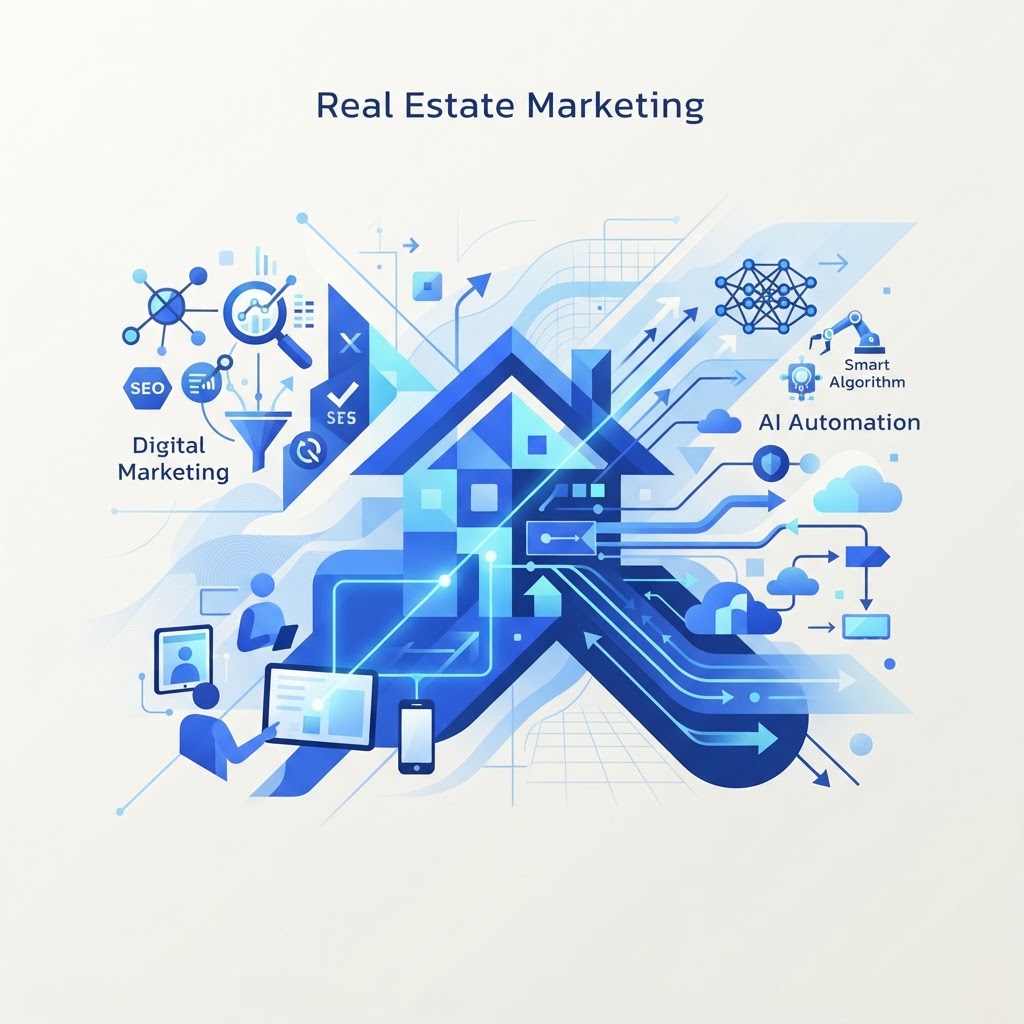
Real Estate Marketing Beyond Listings: Trends and Predictions
Real estate marketing is no longer just about getting attention for a listing. The bigger shift is this: firms that win are building faster response systems, clearer trust signals, and better follow-up across the full client lifecycle. For brokerages, teams, and independent agents, the next phase of growth will likely come less from doing more channels and more from connecting data, content, automation, and local credibility in a way that feels useful to buyers and sellers.
This article looks at the trends shaping real estate marketing now and offers practical predictions for what business owners and marketing leads should prepare for next.
The market is moving from campaign thinking to client-journey systems
For years, many real estate marketing plans were built around bursts of activity: launch the listing, run ads, post on social media, hold the open house, then move on. That approach still has a place, but it is becoming less effective when used on its own.
Consumers now expect a more connected experience. A prospect might discover an agent through a neighbourhood video, visit a home valuation page, read market updates, watch listing tours on social media, and only then decide to inquire. If each step feels disconnected, momentum drops.
The practical trend is a move away from isolated campaigns and toward systems that support the entire journey:
- first-touch awareness through local content
- lead capture through valuation tools, guides, alerts, or inquiry forms
- rapid follow-up through CRM and automation
- consistent nurture through email and remarketing
- post-transaction communication that supports referrals and repeat business
Prediction: lifecycle marketing will outperform one-off promotion
In real estate, repeat and referral business often matter as much as new lead acquisition. Over the next few years, more firms will treat past clients, inactive leads, and homeowner audiences as active marketing segments rather than leftover database records.
That means stronger investment in:
- segmented email journeys
- automated check-ins tied to ownership milestones
- seller and buyer education sequences
- long-term database hygiene
- CRM visibility into source, stage, and follow-up status
The firms that can see where leads stall, not just where they enter, will have a clearer advantage.
Local authority will matter more than broad visibility
Real estate has always been local, but marketing often drifts into generic claims: trusted service, great results, neighbourhood expertise. The issue is that generic messaging is easy to say and hard for a prospect to verify.
A more durable approach is to build observable local authority. That means creating evidence that you understand the micro-market, not just the city as a whole.
Examples include:
- neighbourhood-specific landing pages
- commentary on inventory shifts and buyer behaviour
- plain-language explanations of local pricing conditions
- content about schools, transit, amenities, zoning, or development changes
- guides tailored to first-time buyers, downsizers, or investors in a defined area
This trend connects closely to search behaviour. Prospects often search in highly specific ways, especially when they are moving from general interest to action. They are not always looking for “best realtor in Toronto” or “homes for sale in Calgary.” They may search for school-zone questions, condo fee concerns, commute tradeoffs, or whether now is a reasonable time to sell in a particular neighbourhood.
Prediction: hyperlocal content libraries will replace generic blog calendars
Many real estate blogs still publish broad articles that could apply to almost any region. That content can fill a calendar, but it often fails to create a meaningful competitive edge.
A stronger model is a hyperlocal content library organized around:
- neighbourhood pages n- buyer and seller questions by stage
- market update hubs
- property type guides
- relocation content
Over time, this creates compounding value across organic search, sales conversations, and email nurture. It also gives agents content they can actually use in follow-up instead of posting for the sake of posting.
Speed-to-lead is becoming a brand issue, not just a sales issue
In real estate, response time has always mattered. What is changing is how directly slow follow-up now shapes brand perception. If a prospect fills out a form, requests a showing, or asks for a valuation and hears nothing for hours, the problem is not just a lost lead. It also signals disorganization.
Marketing and operations are becoming harder to separate. A polished ad campaign cannot compensate for a weak intake process. This is especially true in categories where consumers may contact multiple agents or brokerages in a short period.
The firms improving fastest are usually doing a few simple things well:
- routing inquiries instantly to the right person
- using CRM workflows to avoid missed follow-up
- sending immediate confirmations and next-step expectations
- tracking response gaps by source and team member
- creating nurture paths when a prospect is not ready now
Prediction: automation will become standard for inquiry handling, but human follow-up will remain the differentiator
The next phase is not about replacing agents with automation. It is about using automation to protect responsiveness and consistency.
For example, proposed or commonly available approaches may include:
- automated acknowledgment after form submissions
- lead assignment rules inside a CRM
- reminders for incomplete follow-up
- email or SMS sequences for early-stage inquiries
- calendar booking flows for consultations or showings
These systems can reduce delays, but the human element still matters. In real estate, clients are making high-stakes decisions. They want fast answers, but they also want context, judgment, and reassurance. The likely winners will be teams that automate the repetitive parts and preserve human attention for advice and relationship building.
Visual marketing is becoming more educational, not just more polished
Professional photography, video walkthroughs, floor plans, and virtual tours are already common in many markets. The next shift is less about adding visual assets for the sake of it and more about making them do better strategic work.
The strongest visual marketing now helps prospects understand tradeoffs and next steps. Instead of only showcasing a property beautifully, it answers the hidden questions a buyer or seller is already asking.
Examples:
- short videos explaining what makes one neighbourhood different from another
- seller videos on how to prepare a home before listing
- buyer explainers on closing costs, conditions, or offer strategy
- before-and-after staging examples with clear context
- market update videos that translate data into practical meaning
This kind of content tends to have a longer shelf life than listing-only assets and can support multiple channels, from email to social to landing pages.
Prediction: reusable video assets will outperform one-off social posts
Many teams feel pressure to post constantly. But volume alone rarely builds trust. A better direction is creating a library of reusable video and visual assets that serve multiple purposes.
That may include:
- evergreen FAQ videos
- neighbourhood overview clips
- process explainers for buyers and sellers
- onboarding videos for new inquiries
- testimonial-style content only where genuine and compliant to use
This does not mean every asset needs high production. In many cases, clarity, consistency, and relevance matter more than cinematic polish.
First-party data will become more valuable as platforms stay less predictable
Real estate marketers rely on a mix of search, paid media, portals, social platforms, referrals, and direct traffic. But platform rules, ad costs, and visibility patterns can change quickly. That makes first-party data more important.
First-party data is information a business collects directly from its audience, such as:
- email subscribers
- saved search users
- home valuation requests
- event registrations
- consultation bookings
- past client records
- content engagement tied to known contacts
This matters because owned data gives a business more control over follow-up, segmentation, and measurement. It also supports more relevant communication. A prospect interested in condos in one area should not receive the same sequence as a homeowner thinking about downsizing next year.
Prediction: database quality will become a stronger growth lever than audience size
A large contact list can look impressive, but size alone means little if records are outdated, duplicate, or unsegmented. Over the next few years, more real estate firms will prioritize database quality over raw volume.
That likely includes:
- standardizing lead source tracking
- cleaning duplicate or inactive records
- tagging contacts by intent, geography, and property type
- separating buyers, sellers, investors, and past clients
- reviewing which forms and campaigns actually create usable records
From a marketing perspective, this creates better reporting. From a sales perspective, it makes follow-up more relevant. From a leadership perspective, it improves confidence in where budget is going.
AI will be most useful in workflow support, content adaptation, and operational consistency
AI is already affecting marketing, but in real estate the practical value is often less dramatic than the hype suggests. The most useful applications are usually the ones that help teams move faster without lowering quality.
Reasonable use cases may include:
- drafting first versions of listing descriptions for human review
- repurposing one market update into email, social, and website formats
- summarizing inquiry trends from CRM notes
- identifying common questions for FAQ content
- supporting lead routing, tagging, or internal task management
What AI should not do on its own is replace local expertise, compliance judgment, or relationship management. Real estate decisions involve nuance, legal considerations, market interpretation, and trust.
Prediction: firms will split into two groups on AI maturity
One group will use AI casually for speed, often without process controls. The other will use it as part of a defined marketing and operations workflow, with review standards, brand rules, and CRM integration.
The second group is more likely to benefit because the real advantage is not simply generating more content. It is reducing inconsistency and freeing staff time for higher-value work.
For marketing leads, the useful question is not “How do we use AI everywhere?” It is “Where does AI reduce repetitive work without lowering confidence or clarity?”
Measurement will shift from channel vanity to conversion visibility
Real estate teams often track surface-level metrics because they are easy to access: impressions, clicks, video views, follower counts, portal exposure, or website sessions. These can be useful directional signals, but they do not answer the more important business question: which activities improve qualified conversations and closed-loop follow-up?
As budgets stay under scrutiny, firms will need better visibility into what happens after the click.
The most useful reporting usually ties together:
- source of inquiry
- response speed
- appointment or consultation rate
- listing presentation or showing outcomes
- nurture status
- repeat and referral contribution over time
Not every business needs complex attribution modeling. In many cases, a simpler dashboard with clean definitions is more valuable than a sophisticated report no one trusts.
Prediction: the best-performing teams will be the ones that align marketing, CRM, and operations data
This is where many real estate organizations still have gaps. Marketing data lives in one system, lead handling in another, and client records somewhere else. The result is partial visibility.
The next wave of marketing maturity in real estate will likely come from connecting these systems well enough to answer practical questions:
- Which lead sources produce real conversations?
- Where are follow-ups delayed?
- Which content themes assist conversions?
- How much of pipeline activity comes from nurture versus net-new demand?
- Which audiences should receive more budget or more tailored messaging?
Even basic alignment can reveal obvious inefficiencies that broad reporting misses.
Conclusion
The biggest real estate marketing shift is not a new channel. It is a structural change in how successful firms operate: less dependence on one-off listing promotion, more focus on connected systems that support trust, speed, and relevance across the full client journey.
For business owners and marketing leads, the practical takeaway is clear. Build hyperlocal authority. Improve speed-to-lead. Treat your CRM as a growth asset. Invest in reusable educational content. Use AI where it improves consistency, not where it weakens trust. And measure what happens after inquiries arrive, not just before.
The teams that do these things well will be better positioned for whatever the market does next.
FAQ
What is the biggest trend in real estate marketing right now?
The biggest trend is the shift from isolated listing promotion to full-funnel client journey marketing. That includes local content, faster follow-up, better CRM workflows, and long-term nurture for buyers, sellers, and past clients.
How should real estate firms use AI in marketing?
Use AI for workflow support, content repurposing, drafting assistance, and internal organization, with human review in place. It is most useful when it reduces repetitive work while preserving accuracy, local context, and trust.
What should a brokerage or agent improve first?
For many teams, the best first step is improving response and follow-up systems. If inquiries are slow to route, hard to track, or inconsistently nurtured, more advertising often adds waste instead of improving results.
Leadera Strategy Team
The Leadera Strategy Team researches and writes about AI marketing, GEO, automation, and growth for Canadian and North American businesses.
Frequently Asked Questions
Table of Contents
Ready to Build a Smarter Marketing System?
Leadera helps businesses turn strategy into execution with AI-powered marketing, automation, and growth systems.
Book a Free AI Marketing AuditRelated Articles

Accounting & Finance Marketing FAQs for Trust and Fit
A practical FAQ-style guide to marketing for accounting and finance firms, with clear advice on trust, positioning, compliance, and client fit.

Real Estate Marketing Trends and Predictions for 2026
A practical look at how real estate marketing is shifting toward speed, trust, automation, and better local signal in 2026.

Healthcare Marketing Mistakes That Break Patient Trust
A practical breakdown of common healthcare marketing mistakes and how to fix them without adding noise, risk, or patient confusion.

Professional Services Marketing Through Decision Design
A practical framework for marketing professional services by reducing buyer uncertainty, improving trust signals, and aligning outreach with real decisions.
Get Smarter Marketing Insights Every Week
Join Leadera Insights and receive practical strategies on AI marketing, SEO, paid ads, content, and automation.